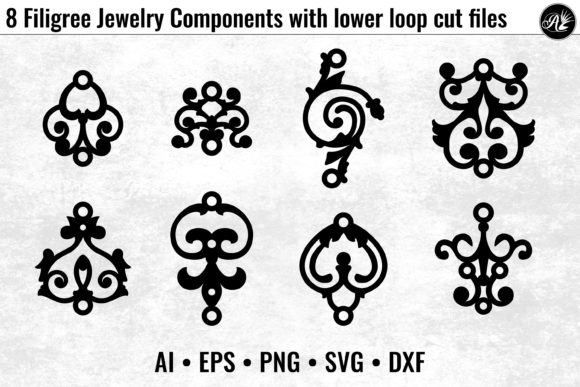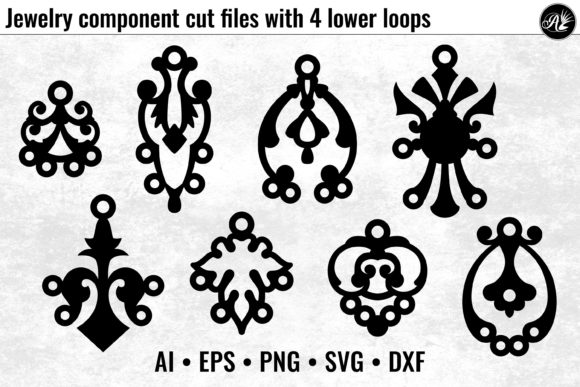
Laser Cutting Earrings: Reviewing 4-Loop Components
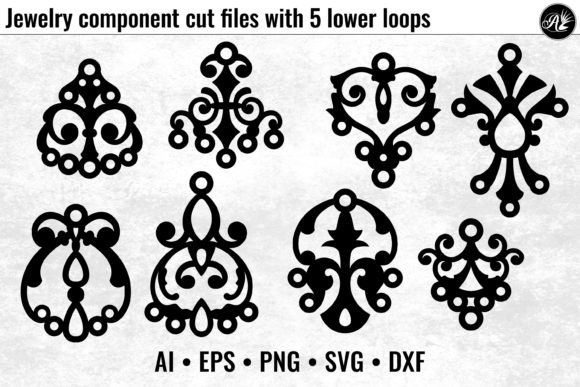
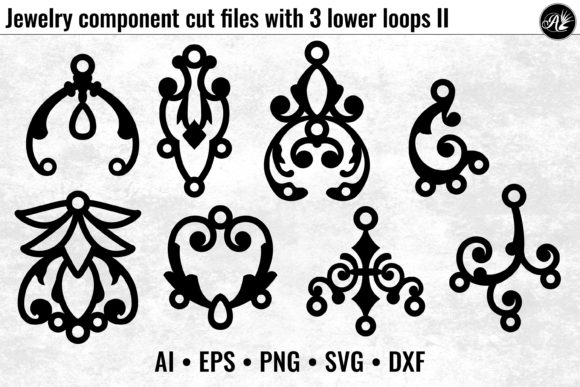
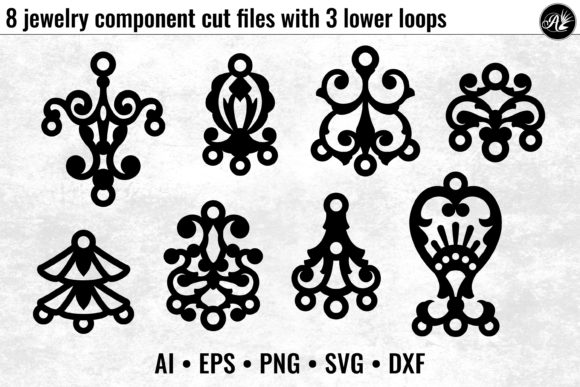
As a brand designer who spends most of my week refining visual identities for local businesses, I am always on the hunt for graphic design assets that offer versatility without sacrificing character. Recently, I evaluated a specific set of Jewelry Components with 4 Lower Loops for a potential rebranding project involving a boutique handmade jewelry studio. While the product description highlights its primary use for Earrings and Laser Cutting, my focus was on how these swirly, dainty elements could translate into a broader brand identity for a small business looking to elevate its market presence.
The first impression of this asset is one of delicate elegance. The four lower loops create a sense of movement and organic flow, suggesting a brand personality that is feminine, artisanal, and approachable. It does not scream "corporate" or "industrial"; instead, it whispers "handcrafted" and "thoughtful." For a local business owner, perhaps running a skincare line, a florist, or a boutique clothing store, this mood is invaluable. It evokes the feeling of a gift being unwrapped, which is exactly the emotional connection we want to foster between a customer and a product.
Transforming Digital Files into Physical Brand Touchpoints
The true power of this design asset lies in its adaptability beyond the jewelry box. Although originally sized for earrings, the vector nature of the files means they can be scaled infinitely without losing quality. In a real-world scenario, I envision using these components as decorative accents on packaging design. Imagine a matte black box for a luxury candle brand, where these swirly loops are foil-stamped in gold on the lid. The four lower loops provide a natural anchor point, perhaps holding a ribbon or framing a central logo.
For small business branding, consistency is key. These components can serve as a recurring motif across various touchpoints. They work beautifully on hang tags attached to clothing, adding a premium feel to a simple garment. On product labels for organic soaps or artisanal jams, the dainty swirls can frame the ingredient list or the brand name, creating a clear visual hierarchy that guides the customer's eye. Even in social media graphics, these elements can act as borders for Instagram stories or decorative corners for promotional posts, tying the digital experience back to the physical product.
Furthermore, the asset supports stronger professional branding by improving shelf appeal. In a crowded marketplace, a cohesive look helps customers recognize your products instantly. By integrating these loops into thank-you cards included in shipments, a local business reinforces its attention to detail. This level of polish builds trust; customers perceive the brand as established and reliable, rather than amateurish.
Strategic Placement for Maximum Impact
Knowing where to deploy these elements is just as important as knowing how to use them. They shine brightest as hero graphics on website banners or as subtle watermarks on product mockups. For seasonal campaigns, such as a Mother's Day promotion or a holiday gift guide, the loops can be arranged to create festive, wreath-like patterns. They are particularly effective on printable design materials like menu graphics for a cafe or price lists for a service-based business, adding a touch of sophistication without overwhelming the text.
However, caution is required. This asset should be used carefully in formal corporate branding where minimalism is paramount. If a brand relies on stark, bold typography, adding swirly decorations might dilute the message. Additionally, avoid using these components on very small labels where the intricate details of the four loops might blur during printing. They should never compete with legal information areas or ingredient-heavy layouts, as clarity and readability must always take precedence over decoration. On low-contrast backgrounds, the fine lines may get lost, so always ensure there is sufficient contrast between the graphic and the surface it rests on.
Practical Notes for the Commercial Designer
Before integrating Jewelry Components with 4 Lower Loops into a client project, several practical steps are essential. First, test the asset on real packaging design mockups to see how the scale interacts with the physical dimensions of the box or bottle. Check its usage in black and white; a good illustration or clipart should hold its form even without color. Preview the design on small labels to ensure the "dainty" nature doesn't turn into visual noise when shrunk down.
Typography pairing is another critical consideration. These loops pair exceptionally well with elegant script fonts or clean sans serif fonts, but they might clash with heavy display fonts or messy handwritten styles. Always test the component beside your chosen typeface to ensure harmony. If you are preparing files for Laser Cutting physical goods, verify the vector paths are closed and clean. For digital use, inspect the PNG design transparency and the editability of the SVG design to ensure you can recolor the elements to match specific brand guidelines.
Finally, and most importantly, confirm the commercial license. As a designer working with creative marketplace assets, ensuring you have the right to use these files for commercial design, client work, and physical product sales is non-negotiable. Whether you are building a Canva template for a client or designing a full editorial design spread, understanding the licensing terms protects both you and the business owner.
In conclusion, while Jewelry Components with 4 Lower Loops may start as a tool for making Earrings, its potential for enhancing small business branding is vast. From marketing visuals to web design elements, this asset offers a pathway to a more polished, emotionally resonant brand presentation. When used with intention and strategic foresight, these swirly components can become the signature flourish that sets a local brand apart in a competitive landscape.