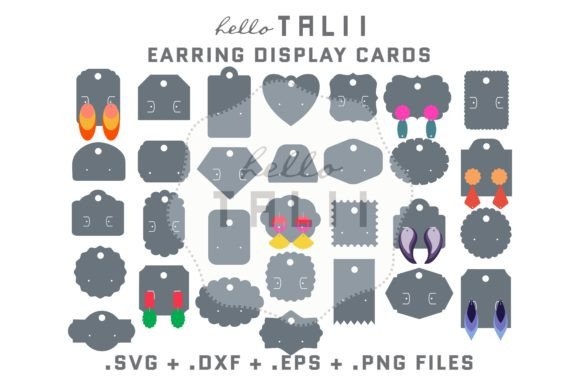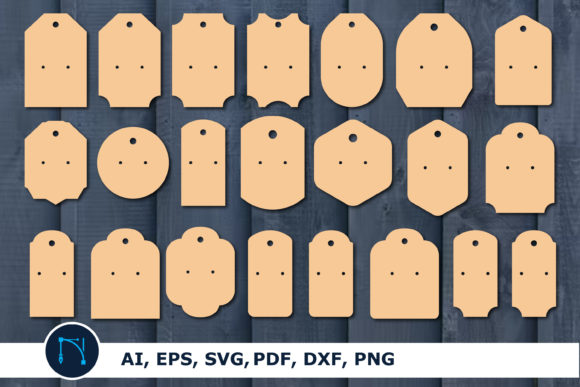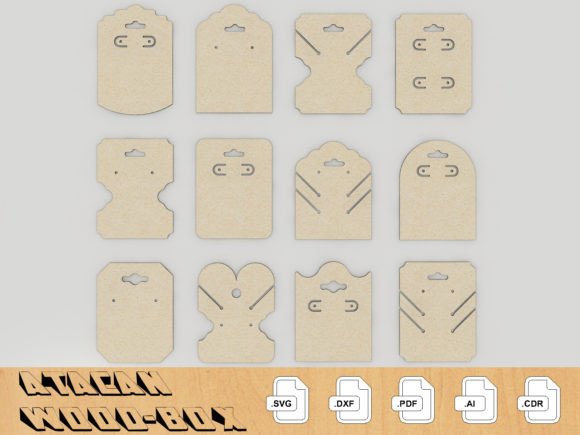
Earring Display Cards: 200 Graphics for Crafts
As a graphic designer who frequently bridges the gap between digital branding and physical product execution, I am always on the lookout for assets that streamline production without sacrificing aesthetic quality. Recently, while developing a comprehensive brand identity package for a boutique jewelry startup, I evaluated the Earring Display Cards SVG DXF Files 200 collection. This wasn't just a casual browse; it was a critical assessment to determine if these files could withstand the rigors of a real client launch. The first impression was one of utilitarian elegance. The mood created by this bundle is clean, organized, and distinctly professional, fitting perfectly into the modern handmade business landscape where presentation is just as vital as the product itself.
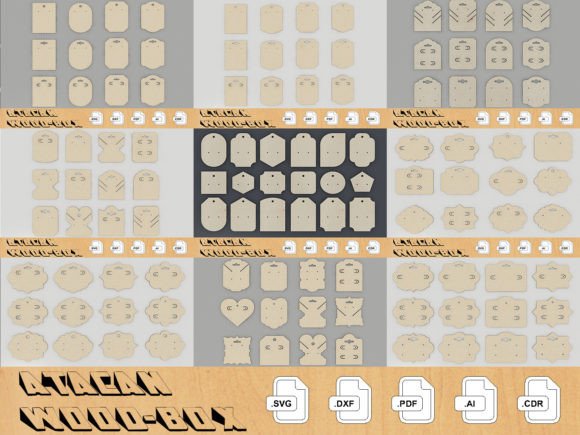
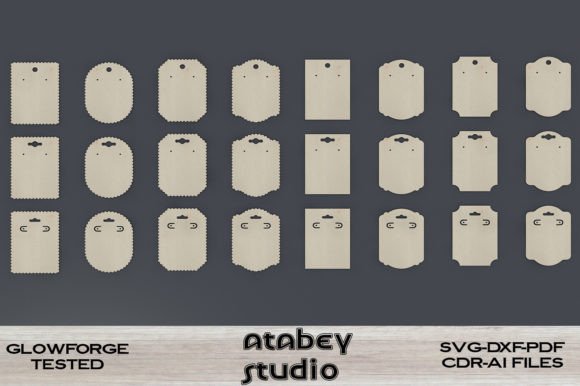
For designers working in the Crafts and Graphics sectors, finding vector files that translate well from screen to machine is often a hurdle. However, this collection immediately stood out because of its technical readiness. These are designed to fit glowforge laser machines but can be used with all laser machines. Tested using a Glowforge Pro, the files demonstrate a level of precision that suggests they were created by someone who understands the nuances of material removal and structural integrity. For a client project involving a seasonal campaign or an Etsy shop overhaul, having 200 variations means we aren't stuck with a generic look. Instead, we can curate a specific visual language that aligns with the brand's unique voice.
Integrating Vector Assets into Brand Identity Systems
In the context of a full-scale branding project, the utility of the Earring Display Cards SVG DXF Files 200 extends far beyond simple packaging. When I reviewed these files, I visualized their application across various touchpoints of the customer journey. While their primary function is obviously for packaging design, the geometric clarity of these vectors makes them excellent candidates for broader marketing visuals. Imagine using the silhouette of a specific card shape as a recurring motif in social media graphics or as a subtle watermark on website graphics. This creates a cohesive thread between the unboxing experience and the digital presence.
For logo design and brand identity work, these assets serve as excellent structural guides. If a client wants a logo that feels "crafted" yet precise, studying the line weights and node structures within these SVG files can inform the creation of custom typography or iconography. They perform exceptionally well when adapted for stickers, product labels, and even t-shirt design elements where a minimalist, geometric aesthetic is desired. In my review, I found that the files hold up beautifully when scaled for large layout areas, such as hero graphics on a landing page or large-format posters for a local craft fair.
Technical Performance and File Versatility
The true test of any graphic design asset is its adaptability across different software and hardware ecosystems. This bundle shines here. These files are ideal for machines using SVG-DXF-PDF-AI-CDR files, offering a level of compatibility that reduces friction in the workflow. Whether you are a Cricut user creating prototypes or a professional using industrial laser cutters for mass production, the file formats ensure that paths remain closed and nodes are optimized. This is crucial for maintaining the sharp edges required in high-end printable design and commercial design projects.
When considering where this asset works best, I would point to product mockups and themed collections. If a client is launching a new line of artisan earrings, these cards provide the perfect stage. They act as decorative accents that elevate the perceived value of the jewelry. Furthermore, they are invaluable for campaign visuals where consistency is key. By selecting a subset of the 200 designs that share a common geometric trait, a designer can create a unified look for a holiday collection or a limited-edition drop.
Strategic Limitations and Design Considerations
However, professional judgment requires knowing when not to use an asset. There are scenarios where the Earring Display Cards SVG DXF Files 200 should be applied with caution. In extremely small sizes, such as favicons or tiny social media profile icons, the intricate details of some card cuts might lose definition, leading to visual clutter. Similarly, in crowded layouts where there is already a heavy amount of text or complex imagery, adding these structural elements could disrupt the visual hierarchy. They are not suitable for minimalist corporate branding that demands absolute simplicity, nor for projects requiring very clean visual hierarchy where every pixel must serve a direct informational purpose.
Readability and brand consistency are paramount. If the display card design competes with the jewelry rather than framing it, the overall impression suffers. The goal is to enhance visual trust and audience engagement, not to distract. Therefore, when integrating these into a design bundle for a client, I recommend testing them against the actual product photography first. Does the card recede enough to let the earrings shine? Does the font pairing on the card (if text is added) complement the brand's existing typography?
Essential Designer Notes for Commercial Use
Before finalizing any client deliverables with these assets, there are several practical steps I always take. First, test the designs in black and white to ensure the contrast holds up without relying on color. Check how the vectors appear on both light and dark backgrounds, as this affects their versatility in editorial design and web design. Preview the files at both small and large sizes to identify any potential rendering issues. It is also vital to place the designs on real mockups to gauge the physical scale and proportion.
Regarding file inspection, always review the specific formats included. While the bundle offers SVG, DXF, PDF, AI, and CDR, confirm that the layers are logical and that there are no stray points that could cause cutting errors. If PNG previews are included, check the transparency to ensure clean compositing in Photoshop or Canva. Compare the style of these cards with your chosen serif, sans serif, script, or handwritten fonts to ensure stylistic harmony. Finally, and most importantly, confirm the commercial license terms. Ensuring you have the rights to use these design assets for client work is non-negotiable for maintaining professionalism and avoiding legal pitfalls.
In conclusion, the Earring Display Cards SVG DXF Files 200 represents a robust resource for anyone operating in the creative marketplace. Whether you are a digital seller looking to expand your inventory, a print-on-demand entrepreneur, or a seasoned agency designer crafting a bespoke solution for a jewelry brand, this collection offers the flexibility and quality needed for serious commercial applications. By understanding its strengths in packaging details and supporting brand elements, while respecting its limitations in complex layouts, designers can leverage this tool to create polished, professional results that resonate with customers and elevate the perceived value of handmade goods.