For the Love of Coffee: A Designer's Review
As someone who spends hours hunched over an embroidery hoop and just as much time vetting digital assets for my craft business, I approach every new machine embroidery design with a mix of excitement and skepticism. We've all been there: you download a file that looks crisp in the software preview, only to find it turns into a bird's nest of thread once it hits the fabric. That is why I took a close look at For the Love of Coffee. While the product listing categorizes this under Wall Decor and highlights its potential for Laser Cutting, my eye immediately went to how these layers could translate into a stunning, textured embroidery project for custom apparel and home goods.
First Impressions: Mood and Visual Personality
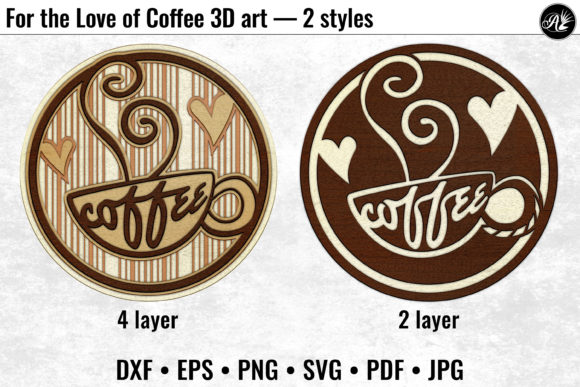
The first thing that strikes me about For the Love of Coffee is its warm, inviting mood. Coffee isn't just a beverage; it's a ritual, a comfort, and a universal language among creatives and early risers alike. The design captures this essence without being overly cluttered. The layout suggests a focus on depth, offering two distinct options: a robust 4-layer configuration for maximum dimensionality and a streamlined 2-layer version.
Visually, the shapes feel organic yet structured. In a digital embroidery file, clean lines are crucial, and here the separation between layers implies a thoughtful approach to stitch density. If adapted for embroidery, the 4-layer option would shine as a sophisticated applique design, where each layer could utilize different textures—perhaps a satin stitch border on the rim of the cup and a dense fill stitch for the steaming aroma rising above. The 2-layer option feels versatile enough for smaller applications, maintaining clarity even when scaled down.
Real-World Application: From Screen to Stitch
To truly evaluate For the Love of Coffee, I imagined a specific scenario: a local boutique owner needing a signature item for their fall collection. They want a high-end tote bag design that screams "cozy café vibes." Using the 4-layer option, I can visualize stacking felt or thick cotton layers to mimic the original laser-cut depth. The result would be a tactile handmade product that customers instinctively want to touch.
Alternatively, consider sweatshirt embroidery. A oversized crewneck with this design placed slightly off-center on the chest creates an instant bestseller. The theme fits perfectly with current trends in custom apparel. For those running an Etsy seller shop focused on kitchen linens, the 2-layer version could be beautifully executed on a linen tea towel. Here, the simplicity ensures the design doesn't overwhelm the weave of the fabric, providing a professional finish that enhances brand consistency.
The versatility extends to holiday embroidery gifts as well. Imagine a set of mug rugs or an embroidered patch sewn onto a canvas apron. The "coffee lover" demographic is vast, spanning from students to corporate executives, making this a safe yet stylish choice for personalized gift offerings. The visual appeal lies in its recognizability; even from a distance, the silhouette communicates warmth and energy, boosting buyer engagement on social media feeds or craft fair tables.
Navigating Technical Challenges
However, enthusiasm must be tempered with technical realism. While For the Love of Coffee shows great promise, there are areas where a designer must proceed with caution. The mention of "layers" in the source description hints at complexity. In embroidery, translating multi-layer concepts requires careful management of stitch density. If the layers are too close together or the fill stitches too dense, you risk creating a stiff, cardboard-like spot on a soft sweatshirt or baby clothes.
Fabric texture plays a massive role here. On smooth, tightly woven cotton, the details will pop. But on textured fabrics like Terry cloth or heavy fleece, fine details might get lost. If you are attempting this on a curved surface like a cap, the 4-layer option might be too bulky unless you significantly reduce the stitch count or switch to a simpler running stitch outline. Similarly, dark fabrics require high-contrast thread colors; a dark brown design on a black hoodie will vanish, ruining the finished product's impact.
Small details are another consideration. If the design includes tiny text or intricate steam swirls, these elements are prone to breaking or merging during stitching, especially if the hoop size limits your ability to stabilize the area properly. For commercial embroidery projects where durability and frequent washing are expected, ensuring that small, isolated islands of stitching are securely anchored is vital for maintaining customer trust.
Practical Notes for the Professional Maker
Before committing this design to a client order or listing it as a digital embroidery file in your shop, I strongly advise a rigorous testing phase. Here is my checklist for integrating For the Love of Coffee into your workflow:
- Scrap Fabric Testing: Always stitch a sample on the exact fabric type you intend to use. What looks good on muslin might pucker on jersey knit.
- Stabilizer Selection: Given the potential for multiple layers or dense fills, choose a stabilizer that offers enough support without adding unnecessary bulk. Cut-away stabilizer is often safer for garments that will be washed frequently.
- Color Contrast Check: Run a black-and-white mockup first. If the design loses its definition in grayscale, it lacks the necessary contrast for clear visibility on varied backgrounds.
- Hoop Size Verification: Confirm that the design fits within your available hoop sizes without requiring excessive re-hooping, which can lead to alignment errors.
- License Confirmation: Since the original description mentions Wall Decor and Laser Cutting, explicitly verify the licensing terms for embroidery use. Ensure you have the rights to sell finished products or modified versions if you are a small shop product creator.
Final Verdict on Value and Appeal
Ultimately, For the Love of Coffee holds significant potential for elevating a craft business portfolio. Its strength lies in its emotional resonance and adaptable structure. When executed with attention to fabric texture and proper stabilization, it transforms from a simple graphic into a premium design asset. Whether used for a charming baby embroidery on a onesie or a bold statement on a boutique tote, the design supports high perceived value.
For the creative entrepreneur, the key is adaptation. Don't just stitch it as-is; think about how the layers interact with your specific materials. By respecting the technical limitations and leveraging the design's inherent charm, you can create items that not only look professional but also foster a genuine connection with your audience. In a market saturated with generic motifs, a well-executed coffee-themed piece remains a timeless staple for any maker looking to brew up some success.